
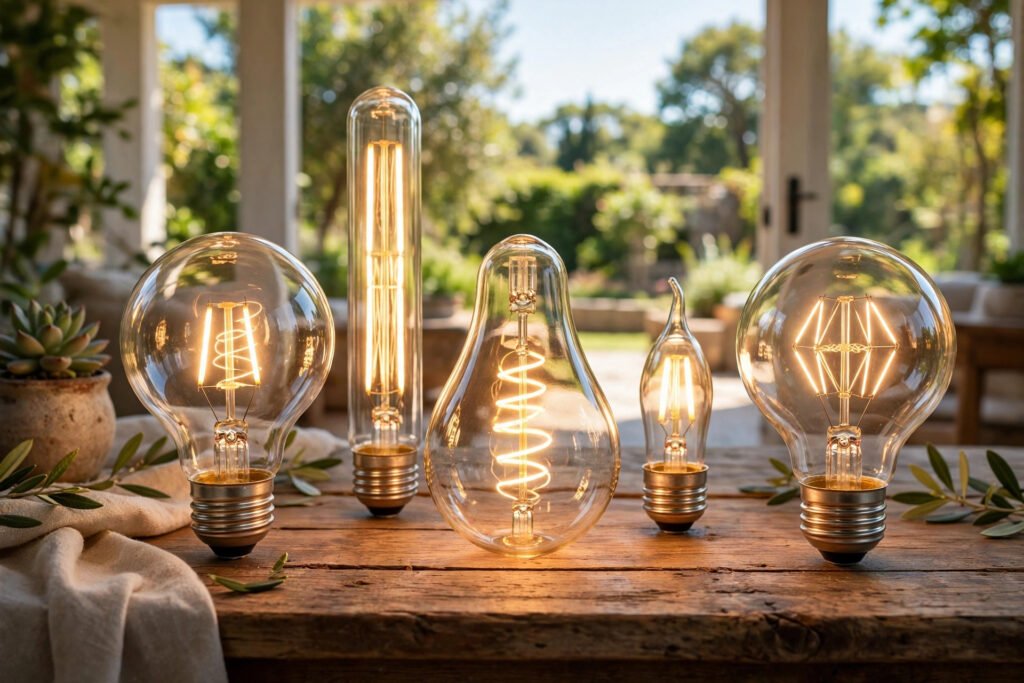
For about a century, we bought light bulbs by watts. A 60-watt bulb was a 60-watt bulb, and everybody knew what that looked like. Then LEDs arrived, a "60-watt equivalent" bulb uses 9 watts, and watts stopped telling us anything about brightness. I stood in the lighting aisle for twenty minutes the first time I had to re-bulb my house with LEDs, completely lost.
The number that actually matters now is lumens. This guide explains what lumens are, how many you need in each room, and how I lit my whole house without ending up with a kitchen like an operating room and a bedroom like a cave — which is exactly what happened on my first attempt.
What Are Lumens, Exactly?
A lumen is a measure of the total visible light a bulb produces — its brightness, in practical terms. More lumens = more light. That's it. Watts measure energy consumed; lumens measure light output. The two are related but they're not the same thing, and with LEDs the relationship varies by bulb.
The translation most people need: a traditional 60-watt incandescent bulb produced about 800 lumens. So when a box says "60W equivalent," it means the LED puts out roughly 800 lumens while drawing only 8–10 watts. Here's the cheat sheet I taped inside my utility closet:
| Old Incandescent | Lumens | Typical LED Wattage |
|---|---|---|
| 40W | 450 lumens | 5–6W |
| 60W | 800 lumens | 8–10W |
| 75W | 1,100 lumens | 10–13W |
| 100W | 1,600 lumens | 14–17W |
| 150W | 2,600 lumens | 20–25W |
Ignore the "equivalent" marketing and shop by the lumen number on the box. Two "60W equivalent" LEDs from different brands can differ by 100+ lumens, and you'll see the difference side by side.
How Many Lumens Per Room? The Real Numbers
Here's where most guides get vague, so let me give you the actual targets I use, expressed as lumens per square foot. Multiply by your room's square footage to get your total target:
| Room | Lumens per Sq Ft | Example: 12×12 Room (144 sq ft) |
|---|---|---|
| Bedroom | 10–20 | 1,450–2,900 lumens |
| Living room | 10–20 | 1,450–2,900 lumens |
| Hallway | 5–10 | 725–1,450 lumens |
| Kitchen (general) | 30–40 | 4,300–5,750 lumens |
| Kitchen (task areas) | 70–80 (at the counter) | Under-cabinet lighting |
| Bathroom | 20–30 | 2,900–4,300 lumens |
| Home office / desk | 30–50 | 4,300–7,200 lumens |
| Garage / workshop | 30–50 | 4,300–7,200 lumens |
| Dining room | 10–20 (dimmable) | 1,450–2,900 lumens |
Let me walk through a worked example — my kitchen, which is 12×14 feet (168 sq ft). Target: 35 lumens/sq ft × 168 = 5,880 lumens total. I hit it with six 4-inch recessed LED retrofits at 650 lumens each (3,900) plus under-cabinet strips over the counters adding roughly 2,000 lumens of task light. Total: ~5,900. The kitchen went from dim and shadowy to bright and even, and my electric bill for that room dropped from about $14/month (six 65W incandescent cans) to about $2/month (six 9W LEDs).
Notice the bedroom range is wide: 10–20 lumens per square foot. That's deliberate. A bedroom at 10 lumens/sq ft with warm light feels cozy; the same room at 20 with cool white feels like an office. For bedrooms I always go lower and warmer — more on color temperature below.
Lumens Aren't the Whole Story: Color Temperature
I re-bulbed my entire house with 5000K "daylight" LEDs because brighter-seeming felt better in the store. My wife made me change every bedroom and living room bulb within a week. The house felt like a hospital.
Color temperature, measured in Kelvin (K), describes whether the light looks warm (yellowish) or cool (bluish):
| Kelvin | Description | Where I Use It |
|---|---|---|
| 2700K | Warm white — classic incandescent feel | Bedrooms, living room, dining room |
| 3000K | Warm-neutral | Bathrooms, hallways |
| 3500–4000K | Neutral white | Kitchen, home office |
| 5000K+ | Daylight — bluish, clinical | Garage, workshop, task lighting only |
My rule now: 2700K everywhere I relax, 3000–4000K everywhere I work. Never 5000K in a living space unless you enjoy the ambiance of a dental office. And here's a detail that matters: lumens and Kelvin are independent. An 800-lumen bulb comes in 2700K and 5000K versions — same brightness, completely different feel.
The Other Number: CRI
CRI (Color Rendering Index) measures how accurately a bulb shows colors, on a 0–100 scale. Cheap LEDs sometimes have a CRI of 80, which makes everything look slightly washed out — food looks less appetizing, skin looks grayish. I noticed this in my kitchen first: tomatoes looked brownish under the bargain LEDs I bought.
For kitchens, bathrooms, and anywhere you care about how things look, buy CRI 90+. It costs maybe $1–$2 more per bulb. For closets, garages, and hallways, CRI 80 is fine. This is one of those specs nobody talks about that makes a visible difference once you know to look for it.
Worked Example: Lighting My Home Office
My office is 10×12 feet (120 sq ft), and I do detailed work in there — writing, reading small print, video calls. Here's the math I did:
- Target: 40 lumens/sq ft for a workspace = 4,800 lumens total
- Overhead: One ceiling fixture with two LED bulbs at 1,100 lumens each (75W equiv), 4000K = 2,200 lumens
- Desk task light: An LED desk lamp rated 800 lumens, adjustable, 4000K = 800 lumens right where I need it
- Ambient fill: A floor lamp with an 800-lumen 2700K bulb for video calls (warm light is flattering on camera) = 800 lumens
- Total: 3,800 lumens general + 800 task = effectively well above target at the desk surface
The key insight: you don't need to hit the full lumens-per-square-foot target with overhead lighting alone. Task lighting (desk lamps, under-cabinet strips) puts lumens exactly where your eyes are working, which is far more effective than blasting the whole room. My office feels bright at the desk and calm everywhere else — the combination I'd recommend for any workspace.
My Bulb-Buying Checklist
After re-bulbing three houses, here's what I check on every box:
- Lumens first — match to the room target, not the "watt equivalent"
- Kelvin second — 2700K for relaxing rooms, 3000–4000K for working rooms
- CRI 90+ for kitchen, bathroom, and anywhere color matters
- Dimmable if the fixture is on a dimmer — non-dimmable LEDs on dimmer switches buzz, flicker, and die young. I lost four bulbs learning this. Check the box for the dimmer compatibility mark.
- Enclosed-fixture rated if the bulb goes in a fully enclosed fixture — LEDs generate heat at the base, and non-rated bulbs cook themselves in enclosed globes. My bathroom vanity bar ate two standard LEDs before I read the fine print.
Common Mistakes
1. Shopping by watts or "watt equivalent" instead of lumens. The equivalent labels are approximate marketing. Two brands' "60W equivalent" bulbs can differ by 15% in actual output. Read the lumen number — it's printed on every box by law.
2. Using 5000K daylight bulbs in living spaces. I did this throughout my first house and it felt sterile. Daylight bulbs have their place (garage, workshop, task lighting), but 2700–3000K is what makes a home feel like a home.
3. Putting non-dimmable LEDs on dimmer switches. They'll buzz, flicker at low settings, and burn out far short of their rated life. If the switch dims, the bulb must say dimmable. Also check that your dimmer is LED-compatible — old dimmers designed for incandescents often don't play well with LEDs even when the bulb is dimmable.
4. Under-lighting kitchens and over-lighting bedrooms. The most common pattern I see: a single dim ceiling fixture in the kitchen (where you need 30–40 lumens/sq ft for safe knife work) and blazing overheads in the bedroom (where 10–20 is plenty). Match the lumens to the task, not the fixture that happened to be there.
5. Ignoring CRI on cheap multi-packs. Those 12-packs of bargain LEDs are tempting, but CRI 80 light makes food, faces, and paint colors look off. Spend the extra dollar per bulb for CRI 90+ in the kitchen, bathroom, and living room. You'll see the difference the first evening.
FAQ
1. What are lumens in simple terms? Lumens measure how much light a bulb gives off — its brightness. More lumens means a brighter bulb. It replaced watts as the number to shop by when LEDs arrived, because LED wattage only tells you energy use, not brightness. A 60W old-style bulb = about 800 lumens.
2. How many lumens do I need for a bedroom? Aim for 10–20 lumens per square foot. For a 12×12 bedroom (144 sq ft), that's roughly 1,450–2,900 lumens total — for example, two 800-lumen bulbs in bedside lamps plus a dimmable overhead. Go warmer (2700K) and toward the lower end for a cozy feel.
3. Is 800 lumens bright enough for a living room? One 800-lumen bulb isn't enough for a whole living room — that's a single lamp's worth. A 15×15 living room (225 sq ft) needs roughly 2,250–4,500 lumens total, spread across multiple sources: overhead lighting plus 2–3 lamps. Layered light from several 800-lumen sources looks far better than one harsh bright fixture.
4. What's the difference between lumens and watts? Watts measure electricity consumed; lumens measure light produced. An old 60W incandescent made 800 lumens. A modern LED makes the same 800 lumens using only 8–10 watts. Higher watts no longer means brighter — it just means a bigger electric bill.
5. Do higher lumens mean higher electric bills? Not directly — your bill depends on watts, not lumens. But they're loosely related: a brighter LED uses slightly more watts than a dimmer one. The real savings come from switching technology: replacing a 60W incandescent (800 lumens) with a 9W LED (800 lumens) cuts that bulb's energy use by 85% with zero change in brightness. Across my house, the LED switch cut my lighting electricity by roughly two-thirds.
About the Author
Dave Collins is a hands-on DIY enthusiast who has spent the past 15 years renovating three of his own homes. He learned most of what he knows by making mistakes first, then asking pros what he did wrong. On this site he writes practical, numbers-first guides so you can skip the mistakes and get it right the first time.