
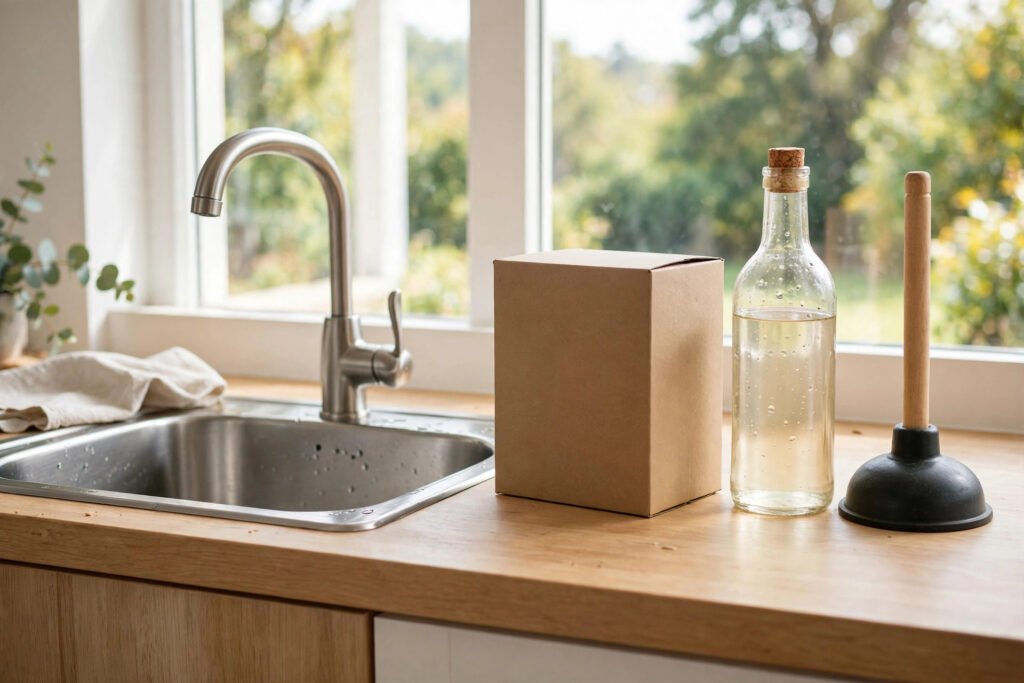
Chemical drain cleaners are nasty stuff. The main ingredient in most of them is sodium hydroxide (lye) or sulfuric acid — chemicals that can burn skin, blind you if they splash, eat through older pipes, and kill the beneficial bacteria in a septic system. I used them for years without thinking about it until a bottle of the stuff erupted back out of my kitchen sink and left a permanent scar on the laminate countertop. That was the last time.
Here's the thing: you don't need them. Almost every household clog can be cleared with mechanical methods and mild household ingredients. I've cleared dozens of drains in three houses without a single bottle of chemical cleaner. These methods are ordered from easiest to most aggressive — start at the top and work down.
What Causes Most Clogs (Know Your Enemy)
Different drains clog with different things, and the method that works depends on the clog:
| Drain | Usual clog material | Best first method |
|---|---|---|
| Bathroom sink | Hair + toothpaste + soap scum | Drain snake or Zip tool |
| Shower/tub | Hair + soap scum | Drain snake or Zip tool |
| Kitchen sink | Grease + food particles | Boiling water + dish soap |
| Toilet | Paper + waste (use a flange plunger) | Plunger, then closet auger |
Hair clogs need to be physically pulled out — no amount of baking soda will dissolve a hairball. Grease clogs respond to heat and soap. Knowing which you're fighting saves you from trying the wrong method three times.
Method 1: Boiling Water (Kitchen Sinks)
The simplest fix, and surprisingly effective for grease-based kitchen clogs.
- Bring a full kettle or large pot of water to a rolling boil.
- Pour it slowly down the drain in 2–3 stages, waiting 10 seconds between pours. Slow pouring keeps the heat concentrated on the clog instead of splashing around.
- Run hot tap water for a minute to check flow.
Warning: Don't use boiling water on PVC pipes if the clog is deep — sustained boiling water can soften PVC pipe joints. For PVC, use very hot (not boiling) tap water instead. Porcelain sinks can also crack from thermal shock, so pour directly into the drain, not onto the basin.
This alone fixed my kitchen sink twice. The clog was congealed cooking grease both times, and the boiling water melted it right through.
Method 2: Baking Soda + Vinegar + Hot Water
The classic volcano experiment actually does useful work in a drain — with realistic expectations. It won't dissolve hair, but it loosens soap scum, light grease, and the slimy biofilm that narrows pipes.
- Pour 1/2 cup of baking soda directly into the drain. Use a funnel or a bent piece of paper if the drain opening is small — you want it in the drain, not piled around it.
- Pour 1 cup of white vinegar after it. It'll fizz immediately.
- Cover the drain with a stopper or wet rag to keep the fizzing action directed downward into the clog instead of up into the air.
- Wait 15–30 minutes.
- Flush with very hot tap water (or boiling water for metal pipes / kitchen grease) for 2–3 minutes.
For maintenance — not clogs — I do this monthly on my bathroom sinks. It keeps the slow buildup from ever becoming a real blockage. Prevention is the whole game with drains.
Method 3: Dish Soap + Hot Water (Grease Clogs)
Dish soap is a degreaser — that's literally its job.
- Squeeze about 1/4 cup of dish soap (Dawn or similar) directly into the drain.
- Follow with a kettle of boiling water (metal pipes) or very hot tap water (PVC).
- Let it sit 10 minutes, then flush with hot tap water.
This works best as a follow-up after Method 1 loosens things, or as a first try on a slow-draining kitchen sink. The soap lubricates the grease and helps the hot water carry it away instead of just pushing it further down.
Method 4: The Plunger (Done Right)
Most people plunge wrong. A plunger needs a seal and water to work — it's hydraulic pressure that clears the clog, not air.
- Use the right plunger: a cup plunger (flat bottom) for sinks, a flange plunger (with the extra rubber flap) for toilets. Using a cup plunger on a toilet is why people think plungers don't work.
- Fill the fixture with enough water to cover the plunger's cup — 2–3 inches.
- Block the overflow drain in sinks and tubs with a wet rag. If you don't, pressure escapes through the overflow and your plunging does nothing. This is the step everyone misses.
- Seat the plunger firmly over the drain and pump vigorously — 15–20 hard strokes. You're trying to agitate and break up the clog, not just push once.
- Pull the plunger away sharply on the last stroke. The suction on the pull-back is half the technique.
- Check drainage. Repeat 2–3 times if it's improving but not clear.
My record is four rounds on a shower drain before it broke free. Each round it drained a little faster, which told me I was winning. If there's zero improvement after three rounds, move to the snake.
Method 5: The Drain Snake / Zip Tool (Hair Clogs)
For bathroom drains, this is the method. Hair doesn't dissolve — it has to come out.
The $5 Zip tool is a flat plastic strip with barbs. It's the highest-value plumbing tool ever made:
- Push it slowly down the drain until you feel resistance.
- Wiggle it slightly and pull straight up — slowly. The barbs grab the hair.
- Prepare yourself. What comes up is disgusting. This is normal. This is the job.
- Repeat 2–3 times until the tool comes up clean.
- Flush with hot water.
A hand-crank drain snake ($25–30, 25 feet) handles deeper clogs the Zip tool can't reach:
- Feed the cable into the drain while turning the crank clockwise.
- When you hit resistance, keep cranking — the auger tip is boring into the clog.
- Once through, crank a few more turns, then reel it back slowly.
- Flush with hot water.
I pull a genuinely horrifying wad of hair out of my shower drain every 4–5 months with the Zip tool. Takes three minutes. The shower went from ankle-deep puddles back to normal drainage instantly. If your tub drains slowly, try this before anything else — I'd bet on hair 9 times out of 10.
Method 6: Clean the P-Trap (Kitchen and Bathroom Sinks)
If the clog is in the curved P-trap under the sink, no amount of plunging from above will clear it efficiently. Cleaning the trap directly takes 15 minutes.
- Put a bucket under the trap. There will be water in it — that's its job.
- Unscrew the two slip nuts holding the curved trap section (usually hand-tight; use channel-lock pliers gently if stuck).
- Pull the trap down and dump it into the bucket.
- Scrub the inside with an old bottle brush or rag. Kitchen traps accumulate a truly vile layer of grease.
- Check the straight pipe sections too — run the Zip tool or a brush through them.
- Reassemble hand-tight, then a quarter-turn with pliers. Don't overtighten plastic nuts — they crack.
- Run water and check for leaks at both joints.
The first time I did this, I found the trap packed with what looked like gray clay — years of soap and grease. No chemical on earth was getting through that. Ten minutes of scrubbing and the sink drained like new.
When to Call a Plumber
DIY has limits. Call a professional if:
- Multiple fixtures are backing up at once (tub + toilet + sink). That's a main line blockage, not a fixture clog — it needs a professional-grade sewer auger or hydro-jetting.
- Sewage is coming up through any drain. Stop using water and call someone.
- You've tried everything above and the drain is still fully blocked. The clog may be deep in the wall or a collapsed/broken pipe.
- You have a septic system and drains are slow everywhere. That can mean a full or failing septic tank — not a DIY diagnosis.
A drain cleaning visit typically costs $150–300. A main sewer line clearing runs $300–600. Expensive, but cheaper than a sewage backup in your basement.
Mini Case Study: The Kitchen Sink That "Needed Replacing"
A friend was quoted $400 to "replace the trap assembly and repipe" her slow kitchen sink. Before she agreed, I brought over a kettle and some dish soap. Boiling water + 1/4 cup of Dawn, wait 10 minutes, flush — the sink went from a 5-minute drain to normal. Then I showed her the monthly baking soda routine. Two years later, still draining fine.
Not every slow drain is that easy. But the order of operations matters: try the $0 fix before the $400 fix. Grease is the #1 kitchen sink clog, and heat plus soap is exactly what dissolves grease.
Common Mistakes
1. Reaching for chemical cleaner first. It rarely works on hair (the most common bathroom clog), it can damage pipes and fixtures, and if it fails, you've now got a sink full of caustic chemicals that a plumber has to deal with. Tell any plumber you call if you used chemicals — it's a safety issue for them.
2. Plunging without blocking the overflow. In sinks and tubs, the overflow drain vents your pressure. A wet rag stuffed in the overflow makes plunging dramatically more effective.
3. Using a cup plunger on a toilet. The flat cup can't seal the toilet's curved drain. You need a flange plunger. This single mix-up is responsible for half the "plungers don't work" complaints.
4. Pouring boiling water into a PVC-piped sink. Sustained boiling water can soften PVC joints. Use very hot tap water instead if your drain pipes are plastic.
5. Giving up on the snake too early. The first pull with a Zip tool often brings up only part of the clog. Two or three passes is normal. If the tool comes up clean and the drain still won't flow, the clog is deeper — step up to the hand-crank snake.
6. Overtightening plastic P-trap nuts. Hand-tight plus a quarter-turn. Cranking on plastic slip nuts cracks them, and then you have a leak instead of a clog.
7. Ignoring slow drains until they're fully blocked. A drain that's "a little slow" is a drain telling you there's buildup. The baking soda routine or a quick Zip-tool pass now prevents the emergency later.
FAQ
Does baking soda and vinegar really unclog drains? It helps with light buildup — soap scum, grease film, and slimy biofilm. It will not dissolve hair or clear a fully blocked drain. Think of it as maintenance and mild-clog treatment, not a miracle cure. For hair, use a Zip tool; for deep clogs, use a snake.
How do you unclog a drain naturally? Work through this order: boiling water (for grease), baking soda + vinegar + hot water flush, dish soap + hot water, proper plunging technique, a Zip tool or drain snake for hair, and cleaning the P-trap directly. One of these clears the vast majority of household clogs.
Why is my bathroom sink draining so slowly? Almost always hair mixed with toothpaste and soap scum, caught in the drain assembly or the first few inches of pipe. A $5 Zip tool pulled straight down the drain fixes it in minutes — pull the stopper first if it's a pop-up style, since hair wraps around those.
Can I use a plunger on a kitchen sink? Yes, with a cup plunger. Fill the sink with a few inches of water, block the overflow/drain vent if it's a double sink (plunge one side while sealing the other with a wet rag and stopper), and pump vigorously. It works well on food-particle clogs.
Is it safe to mix baking soda and vinegar in drains with a septic system? Yes — baking soda and vinegar are septic-safe. They're mild and break down completely. What septic systems don't like are chemical drain cleaners (lye/acid), which kill the bacteria your septic tank needs to function.
About the Author
Dave Collins is a hands-on DIY enthusiast who has spent the past 15 years renovating three of his own homes. He learned most of what he knows by making mistakes first, then asking pros what he did wrong. On this site he writes practical, numbers-first guides so you can skip the mistakes and get it right the first time.