
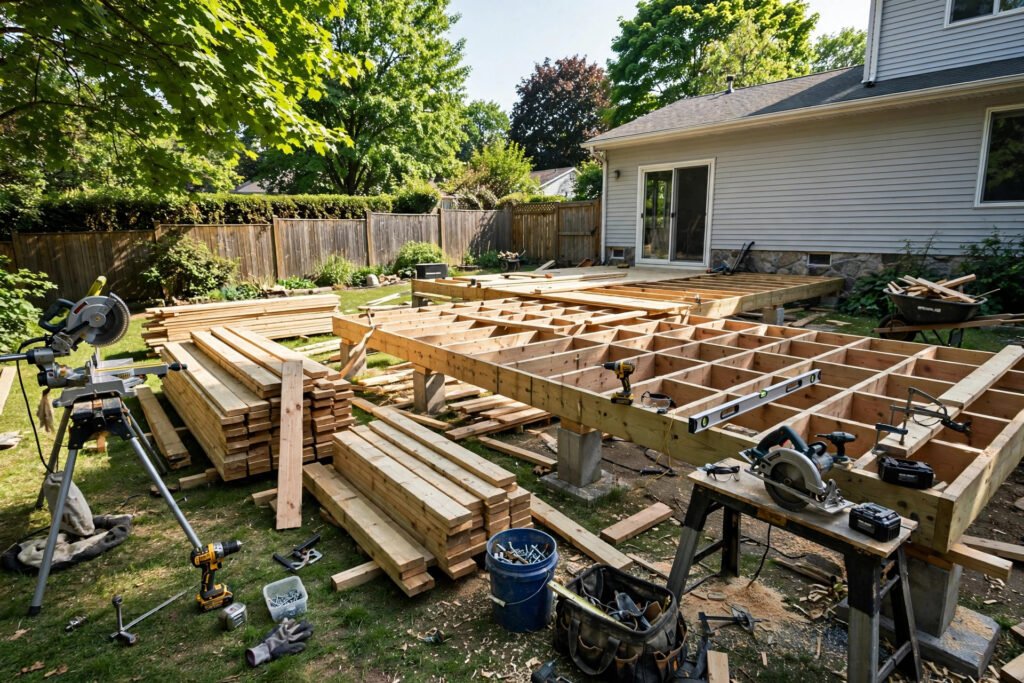
A deck is the most expensive DIY project most homeowners ever take on, and it's the one where bad budgeting hurts the most. I know because I under-budgeted my first deck by almost 40% — I priced the decking boards and figured I was most of the way there, forgetting about footings, framing lumber, hardware, and the permit. The "weekend project" turned into a two-month project while I saved up for phase two.
This guide gives you the real numbers: what a deck costs per square foot, where the money actually goes, DIY versus hiring a pro, and a complete worked budget for a standard 12×16 deck so you can plan yours without surprises.
The Quick Answer: Cost Per Square Foot
| Build Type | Wood (PT Pine) | Composite | Hardwood (Ipe) |
|---|---|---|---|
| DIY (materials only) | $15–$25/sq ft | $25–$40/sq ft | $30–$50/sq ft |
| Pro installed | $30–$45/sq ft | $50–$75/sq ft | $70–$100+/sq ft |
So a 12×16 deck (192 sq ft) runs roughly $2,900–$4,800 DIY in pressure-treated pine, or $9,600–$14,400 professionally installed in composite. That range is wide because decks vary enormously — a ground-level platform deck is a different animal from a raised deck with stairs, railings, and a permit.
The single biggest cost driver is the decking material. Pressure-treated pine decking runs about $2–$3 per linear foot for 5/4×6 boards; composite runs $4–$8 per linear foot. On a 192 sq ft deck you need roughly 400 linear feet of decking, so that price gap alone is $800–$2,000.
Where the Money Goes: Full Budget Breakdown
Here's a realistic line-item budget for a 12×16 (192 sq ft) pressure-treated pine deck, built DIY, about 2 feet off the ground with one set of stairs and a simple railing. These are 2026 prices from my local lumber yard:
| Item | Quantity | Cost |
|---|---|---|
| Decking boards (5/4x6x16 PT pine) | 26 boards | $780–$1,040 |
| Joists (2x8x12 PT) | 14 | $250–$350 |
| Beams (2x10x12 PT, doubled) | 4 | $140–$200 |
| Posts (6x6x8 PT) | 6 | $150–$210 |
| Concrete footings (bags or tubes) | 6 footings | $90–$150 |
| Ledger board + flashing | 1 (16 ft) + flashing kit | $60–$100 |
| Joist hangers, post bases, structural screws | assorted | $150–$250 |
| Railing (wood balusters + top rail) | 44 linear ft | $350–$550 |
| Stairs (stringers, treads, 4 steps) | 1 set | $150–$250 |
| Permit | 1 | $150–$400 |
| Total | $2,220–$3,500 |
That works out to $11.50–$18 per square foot for a basic DIY wood deck — right in line with the $15–$25 range once you add stairs, railing upgrades, or a nicer grade of lumber. My actual first deck (a 10×14, so 140 sq ft) cost me $2,650 all-in, or about $19/sq ft, because I upgraded to a nicer railing and needed extra concrete for deeper footings in my clay soil.
Notice how the decking boards — the part everyone prices first — are only about a third of the total. The framing lumber, hardware, and footings are the silent budget-killers. Structural hardware alone (joist hangers, post bases, hurricane ties, structural screws) ran me nearly $200, and I hadn't budgeted a dime for it on my first build.
DIY vs. Hiring a Pro
| Factor | DIY | Pro |
|---|---|---|
| 12×16 wood deck total | $2,200–$3,500 | $5,800–$8,600 |
| 12×16 composite deck total | $4,800–$7,700 | $9,600–$14,400 |
| Time required | 3–6 weekends (solo) | 1–2 weeks |
| Skill needed | Intermediate carpentry | None (but vet the contractor) |
| Permit handling | You pull it yourself | Usually included |
| Warranty | None | Typically 1–5 years workmanship |
The labor savings are enormous — a pro crew charges $15–$35 per square foot for labor alone. But decks are structural. A deck collapse injures people every year in the US, and the cause is almost always a failed ledger connection or undersized footings. If you're DIYing, the building code is not optional reading — it's the instruction manual. I had my framing inspected twice (required by my permit), and the inspector caught a missing flashing detail that would have rotted my house's rim joist within five years. Best $200 permit fee I ever spent.
My rule of thumb: DIY the deck if it's low (under 30 inches off the ground, which often exempts you from railing requirements and simplifies the permit) and you're comfortable with a circular saw and a level. Hire a pro if the deck is elevated, roof-adjacent, or you want composite with hidden fasteners — the material is too expensive to learn on.
Wood vs. Composite: The 15-Year Math
Everyone asks about upfront cost, but the smarter question is total cost over the deck's life. Here's the comparison for our 192 sq ft deck:
| Cost | PT Pine (DIY) | Composite (DIY) |
|---|---|---|
| Initial build | $2,200–$3,500 | $4,800–$7,700 |
| Staining/sealing (every 2–3 yrs) | $150–$250 × 5–7 times = $750–$1,750 | $0 |
| Board replacements | $200–$400 over life | $0 |
| Cleaning | $0 (hose) | $50/yr supplies ≈ $750 |
| Lifespan | 15–20 years | 25–30 years |
| 15-year total | $3,150–$5,650 | $5,550–$8,450 |
Composite costs more even over 15 years — but the gap narrows a lot once you count your weekends spent staining. I stained my pine deck three times in eight years before I got tired of it; each time was a full weekend plus $180 in stain and supplies. If you value your time at anything, composite starts looking reasonable. That said, there's nothing wrong with pine — my neighbor's 18-year-old PT deck still looks fine because he actually maintains it. The material matters less than the maintenance.
One thing the table doesn't capture: splinters. My kids got splinters from our pine deck roughly once a summer. Composite doesn't splinter, doesn't get as hot in direct sun (lighter colors, anyway), and you can walk on it barefoot without thinking. For a family deck, that's worth something the spreadsheet misses.
Hidden Costs People Forget
These are the line items that blew up my first deck budget:
- The permit: $150–$400. Most jurisdictions require one for any deck attached to the house or over 30 inches high. Some also require engineered drawings for elevated decks ($300–$600 extra).
- Footing depth surprises. Code in my area requires footings 36 inches deep (below frost line). That's 6 footings × 3 feet = a lot more concrete than the "one bag per hole" rule of thumb. Rocky or clay soil can double your digging time — I hit clay and each hole took 45 minutes by hand.
- Ledger flashing done right. Proper ledger flashing (metal flashing + membrane) costs $60–$100 and takes an hour. Skipping it rots your house. This isn't optional.
- Stairs. Each set of stairs adds $150–$400 in materials and half a day of fussy work. Stair stringers are the most technically demanding cut on a deck — I ruined two stringers learning to cut them right.
- Tool costs. If you don't own a circular saw, drill/driver, and a 4-foot level, budget $200–$400 for tools (or borrow). A miter saw ($150–$300) isn't required but makes the railing and stair work dramatically faster.
- Disposal. Tearing out an old deck? Dumpster or dump fees run $200–$500. My old deck's demolition filled a borrowed trailer three times.
Mini Case Study: My 10×14 Deck Rebuild
The numbers from my actual project, because I wish someone had shown me theirs first:
- Size: 10×14 ft (140 sq ft), 24 inches off the ground, one 4-step stair, wood railing on two sides
- Material: Pressure-treated pine throughout
- Budget going in: $1,800 (I priced decking + "some lumber")
- Actual total: $2,650 — the overrun was footings/hardware ($380 more than guessed), railing ($220 more), permit ($200), and a second lumber run ($150)
- Time: 5 weekends solo, roughly 60 hours. Framing took two weekends, decking one, railing and stairs two.
- Cost per sq ft: $18.93
- 8 years later: Re-stained 3 times, replaced 4 decking boards that cupped, structure still solid. Would I do it again? Yes — but I'd budget $3,000 from the start and save myself the mid-project stress.
Common Mistakes
1. Under-budgeting by pricing only the decking. The decking is a third of the cost. Price the framing, hardware, footings, railing, stairs, and permit before you commit. My first budget missed $850 of real costs.
2. Attaching the ledger board wrong. The ledger connection to the house causes the majority of deck collapses. It needs 1/2-inch lag screws or through-bolts (not nails, not deck screws) on a strict spacing schedule, plus proper flashing. If you're unsure, this is the one detail worth paying a carpenter for an hour of advice.
3. Skipping the permit and inspections. Beyond the legal risk, the inspector is free expert review. Mine caught a flashing error that would have caused thousands in rot damage. The permit also matters for resale — unpermitted decks show up in inspections and kill deals.
4. Setting joists at the wrong spacing. Standard is 16 inches on center for wood decking, but composite decking often requires 12 inches on center (check the manufacturer's specs — it varies by product and by diagonal vs. perpendicular installation). Wrong spacing voids the composite warranty and causes bounce.
5. Forgetting to slope slightly away from the house. A deck should drop about 1/8 inch per foot away from the house so water runs off instead of pooling against the siding. I built my first deck dead level and spent two years watching water sit against the house after every rain before I fixed the flashing properly.
FAQ
1. How much does a 12×16 deck cost in 2026? DIY in pressure-treated pine: $2,200–$3,500 ($11–$18/sq ft). Professionally installed: $5,800–$8,600 for wood, $9,600–$14,400 for composite. Add 15–20% if the deck is elevated more than 4 feet (more posts, deeper footings, full railing).
2. Is it cheaper to build a deck or pour a concrete patio? A ground-level concrete patio is usually cheaper — roughly $6–$12/sq ft installed versus $30–$45/sq ft for a pro-built wood deck. But patios only work at ground level; if your back door is 3+ feet off the ground, a deck is the practical choice. DIY decks close the gap significantly.
3. How long does it take to build a deck yourself? A 12×16 ground-level deck takes a solo DIYer with basic skills roughly 40–70 hours — that's 3–6 weekends. My 10×14 took 5 weekends and about 60 hours. A helper, especially for setting posts and laying decking, cuts the time by a third.
4. Do I need a permit to build a deck? Almost certainly yes if it attaches to your house or is more than 30 inches above grade. Freestanding ground-level platforms under 30 inches are exempt in many (not all) jurisdictions. Call your building department — the permit ($150–$400) buys you inspections that catch structural mistakes.
5. What's the cheapest way to build a deck? A low, freestanding platform deck in pressure-treated pine, built DIY, with no railing (stays under 30 inches so no railing required) and minimal stairs. You can get a 12×12 platform deck to around $1,500–$2,000 in materials. Skip composite, skip fancy railings, keep it simple and rectangular — every angle and curve adds cost.
About the Author
Dave Collins is a hands-on DIY enthusiast who has spent the past 15 years renovating three of his own homes. He learned most of what he knows by making mistakes first, then asking pros what he did wrong. On this site he writes practical, numbers-first guides so you can skip the mistakes and get it right the first time.